

Quick Answer
How can I tell whether my gums are healing normally?
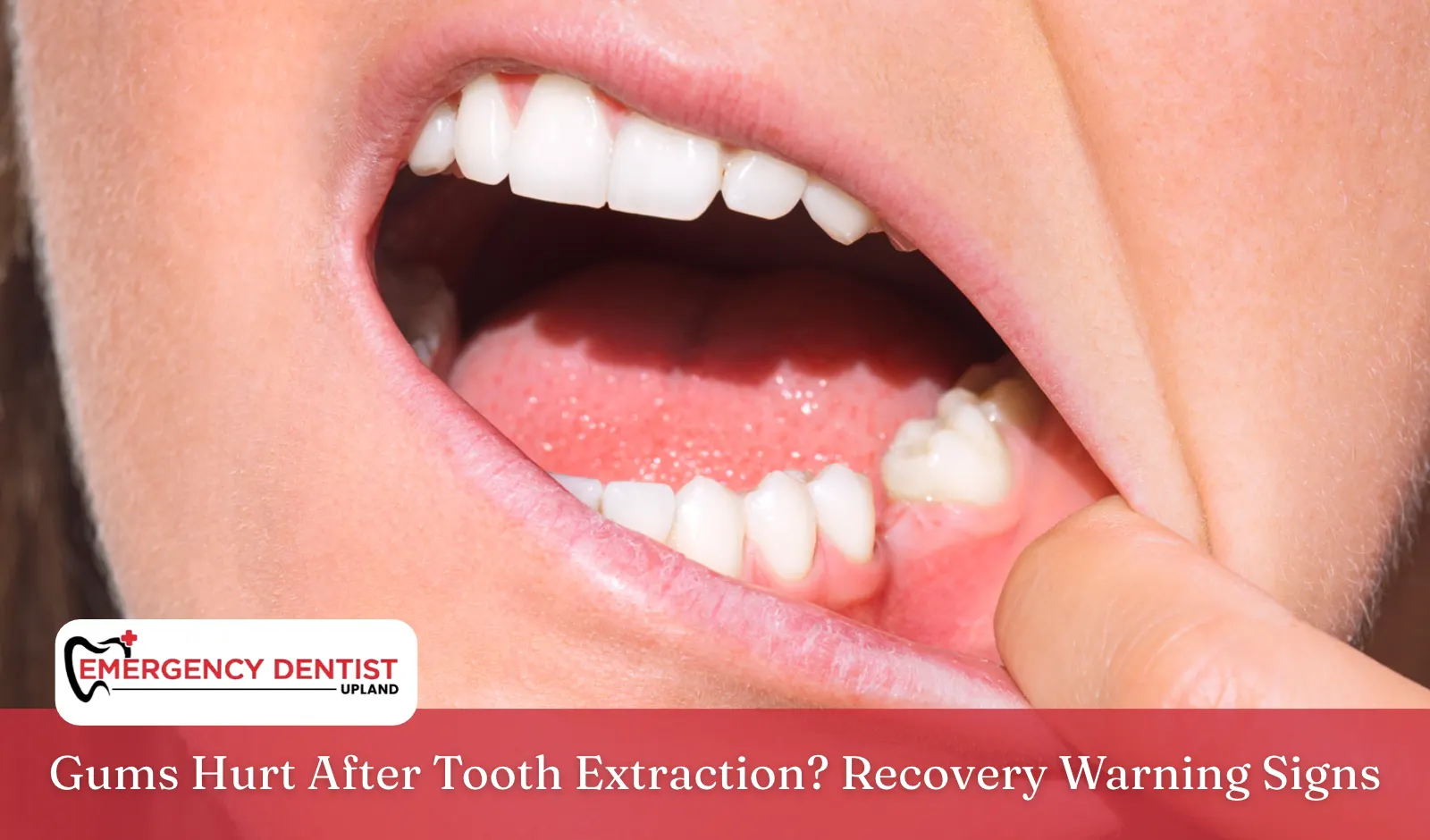
When your gums hurt after tooth extraction, mild discomfort is generally normal during the first few days. Swelling may increase before it begins to settle, and the area can remain sensitive while new tissue develops. Pain that worsens, rather than improves, or occurs with fever, pus, or unusual swelling should be checked by a dentist.
Key Takeaways
- Tender gums are common after a tooth is removed.
- A protective clot helps the socket begin repairing itself.
- Soreness and swelling should gradually improve after the early recovery period.
- Gentle brushing and appropriate foods can help avoid irritation.
- Severe pain, fever, or worsening swelling may signal complications.
- Trouble breathing or swallowing, facial swelling with fever, or bleeding that will not stop means go to the ER or call 911.
Your gums may stay sore for a while after a tooth extraction, even when healing is on track. Knowing the warning signs helps you protect your mouth.
Why Gum Tenderness Happens After Tooth Removal

After a tooth is removed, your body starts repairing the empty space.
A blood clot forms in the socket. It protects the bone and nerves underneath while healing begins.
Everyone heals differently, but the first week often looks like this:
- First 24 hours: Light bleeding, tenderness, and mild swelling are common. Avoid touching the wound.
- Days 2 to 3: Swelling may reach its highest point, and some soreness can continue.
- Days 4 to 7: Many patients begin noticing less pain and improved comfort when eating or speaking.
Deeper healing under the gums continues for weeks to months.
Related: Healing After Tooth Extraction: Your Recovery Timeline
What Normal Gum Pain May Feel Like
Expected soreness often feels like a mild ache or tenderness near the extraction site.
You might notice discomfort when chewing, brushing nearby teeth, or opening your mouth widely.
These symptoms should become less noticeable over time.
Pain that suddenly becomes severe is not typical of normal healing.
If discomfort begins spreading toward your ear or jaw, or becomes difficult to control, contact your dentist.
Possible Complications After an Extraction
While most extraction wounds recover without serious problems, complications can occasionally develop.
Dry socket: The protective clot may dissolve or become dislodged before enough healing tissue develops. This can expose sensitive bone and cause intense pain several days after extraction.
Infection: Fever, pus, worsening swelling, or increasing redness may signal an infection. It needs a dentist and will not clear up on its own.
Ongoing unpleasant taste: A bad taste can occur when food debris collects near the wound. If it comes with more pain or swelling, see your dentist.
Do not try to clean deep inside the socket or remove anything that appears to be healing tissue. Let your dentist check it instead.
Simple Ways to Care for Your Gums
Apply cold therapy. Use an ice pack wrapped in a towel against your cheek for about 15 minutes at a time during the first day. The cold may help limit swelling and numb the area temporarily.
Clean with a gentle rinse. After the first day, warm salt water may help keep the mouth clean. Gently rinse without strong swishing or spitting.
Choose comfortable meals. Soft food such as yogurt, oatmeal, scrambled eggs, and mashed vegetables can reduce pressure on the wound.
Keep brushing. Brush your other teeth normally, but stay gentle around the socket.
Follow safe pain relief instructions. Over-the-counter pain relievers may ease pain for a while when taken as directed on the label, if they are safe for you.
Avoid smoking, drinking through straws, and chewing hard foods near the affected area.
These habits support healing but cannot guarantee you will avoid problems.
Other Changes During the Recovery Period
Some changes look odd but are normal.
You may notice a pale coating over the socket, slight bruising near your jaw, or a temporary metallic taste.
Mild jaw stiffness can also occur, particularly after a difficult extraction.
These changes should gradually improve.
Avoid using harsh mouth rinses or placing home remedies directly inside the wound.
Related: White Gums After Tooth Extraction: Healing Explained
When to See a Dentist
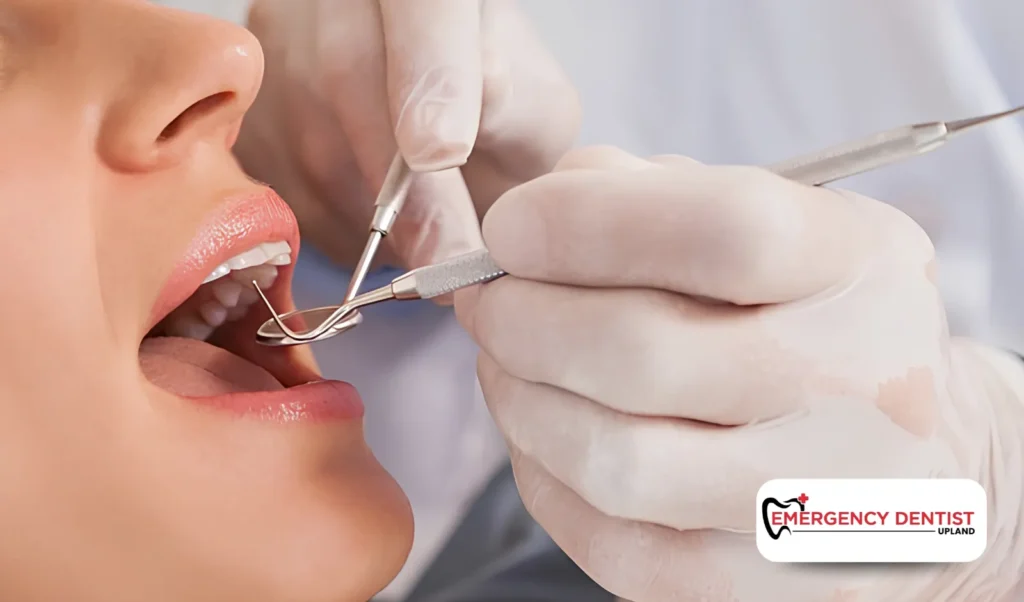
Contact your dentist if you notice:
- Pain that increases after the first few days.
- Swelling that becomes worse rather than better.
- Fever or pus near the wound.
- A persistent foul taste with other symptoms.
- Significant gum pain lasting longer than a week.
Go to the ER or call 911 for trouble breathing or swallowing, face or neck swelling with fever, rapidly spreading swelling, or bleeding that will not stop with firm pressure.
Final Thoughts
Tender gums are often part of normal recovery. What matters most is steady improvement.
If pain gets worse or new symptoms appear, see a dentist to find out whether you need treatment.
Are Your Gums Still Sore After an Extraction in Upland?
Gum pain that lingers or worsens after an extraction can leave you with questions. An Emergency Dentist in Upland can examine the socket, check for complications, and give guidance based on your symptoms. Contact the dental team to arrange a visit.
Frequently Asked Questions
How long does it take for gum swelling to go away?
Swelling often peaks around days two or three and then begins improving. Some swelling may last longer after a difficult extraction.
Can I chew on the opposite side after having a tooth removed?
Yes, chewing on the other side can help you avoid irritating the wound. Choose soft meals during early recovery.
What does dry socket feel like?
Dry socket often causes intense pain a few days after an extraction. It needs care from a dentist.
What if my gums start hurting again after feeling better?
New or worsening pain after initial improvement may indicate a healing problem. Contact your dentist, especially if you also notice swelling, fever, or a bad taste.
When should I go to the ER instead of the dentist?
Go to the ER or call 911 for trouble breathing or swallowing, facial swelling with fever, or bleeding that will not stop.