
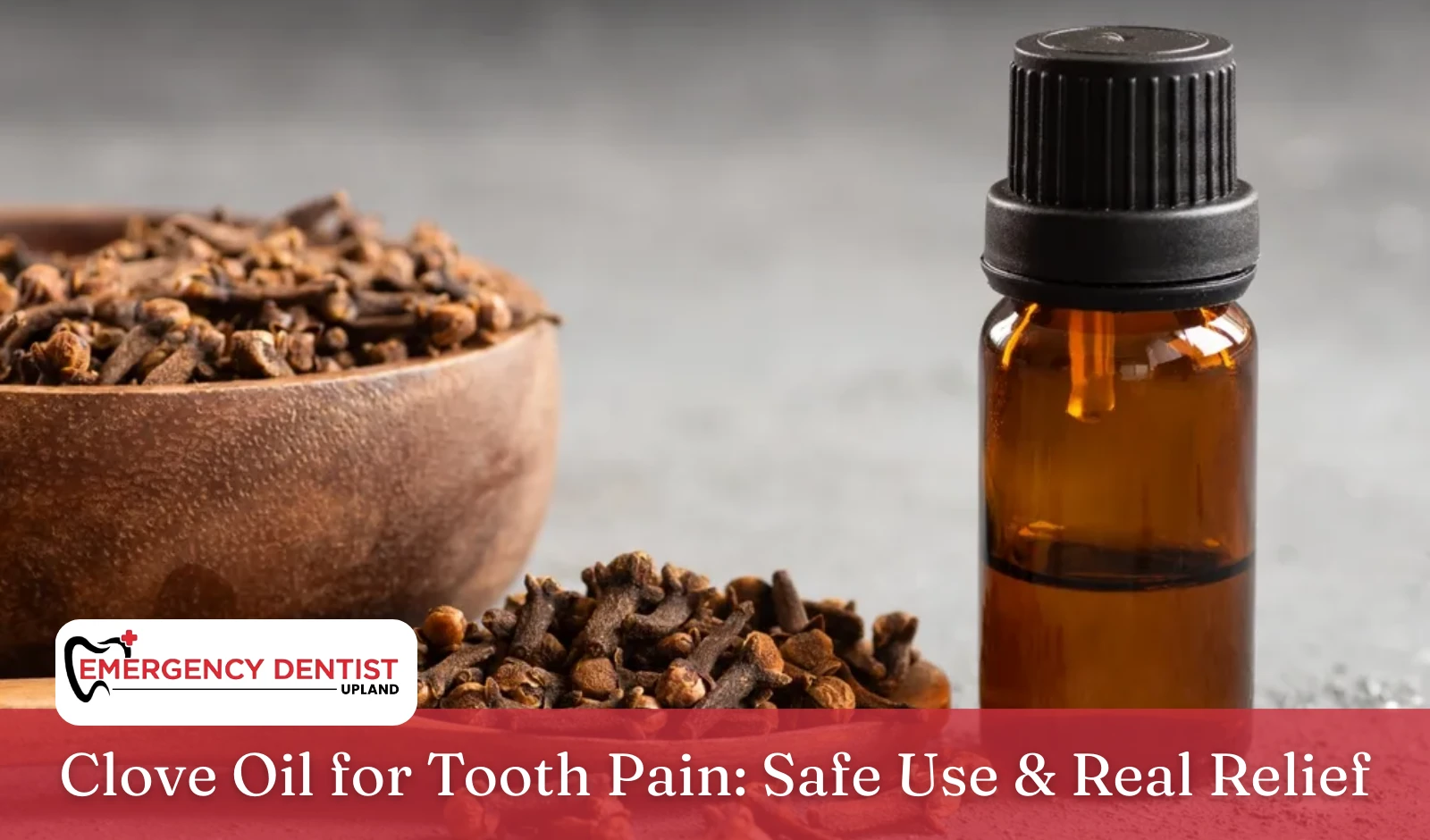
Clove Oil for Tooth Pain: Safe Use & Real Relief
Quick Answer
Does clove oil for tooth pain actually work?
Yes, clove oil can provide temporary relief from toothache pain because of its natural numbing effect. However, it does not fix the dental problem causing the pain.
Key Takeaways
- Clove oil for tooth pain offers short-term pain relief.
- The active ingredient, eugenol, has antibacterial properties and anti inflammatory properties.
- Always use a small amount diluted with a carrier oil such as coconut or olive oil.
- Home remedies for toothache do not replace dental treatment.
- Severe or lasting pain should be evaluated by a dentist.
Tooth pain can begin suddenly and disrupt your entire day. Whether it starts during work or in the middle of the night, the discomfort can be hard to ignore. Because of this, many people try home remedies for toothache, including clove oil for toothache. But how effective is it, and how should it be used safely?
Clove and tooth pain have been linked for centuries in traditional oral health care. Many people use cloves for tooth pain because of the oil found inside the dried flower buds. That oil contains a powerful active ingredient called eugenol.
Why Clove Oil Helps
Eugenol gives clove oil its pain relieving qualities. It works in three main ways:
- It creates a mild numbing feeling in the affected area.
- It fights bacteria thanks to its antibacterial properties.
- It supports healing through anti-inflammatory properties.
Because of these benefits, clove tooth pain remedies are often used when someone needs quick pain relief. Some even compare it to over-the-counter gels. Still, it is important to understand that clove oil provides temporary relief. It will not repair a cavity, cracked tooth, or infection in the affected tooth.
Clove Oil Tooth Pain: How to Use It Properly

If you are searching for clove oil tooth pain how to use instructions, follow these steps carefully to avoid irritation.
What you need:
- Pure clove oil
- A carrier oil such as coconut or olive oil
- Cotton swab or cotton ball
- Warm water
Directions:
- Mix two or three drops of clove oil with one teaspoon of carrier oil such as coconut or olive oil.
- Dip the cotton into the mixture.
- Gently place it on the affected area or affected tooth.
- Leave it in place for a few minutes.
- Remove it and rinse your mouth with warm water.
Always use only a small amount. Applying undiluted oil may irritate your gums. Swallowing clove oil should also be avoided.
Possible Side Effects
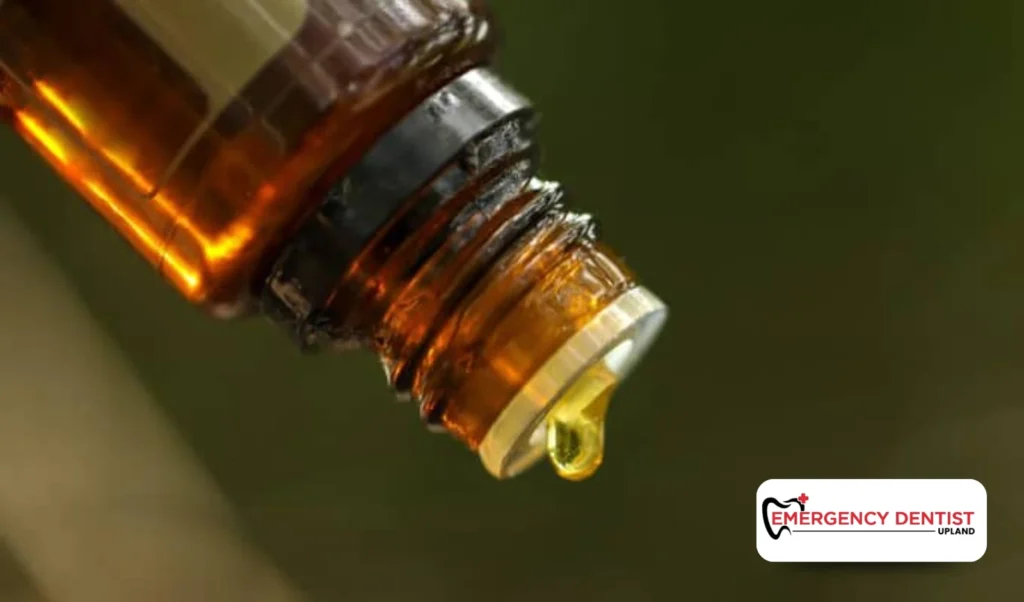
Although natural, clove oil can cause side effects if misused. These may include:
- Gum irritation
- Burning sensation
- Allergic reaction
- Tissue damage when applied directly without dilution
If discomfort increases instead of improving, stop using it.
When Home Remedies Are Not Enough
Clove oil can relieve tooth pain for a short time, but it cannot treat serious dental problems. If your toothache pain is intense, throbbing, or comes with swelling, fever, or a bad taste in your mouth, you may have an infection.
Ignoring symptoms can affect your overall oral health and lead to more complex treatment later.
Get Professional Help Before It Worsens
If clove oil for tooth pain is not solving the problem, professional care is the safest next step. Emergency Dental Upland provides urgent care for severe toothaches, infections, and damaged teeth.
Prompt treatment can protect your smile and address the root cause of pain, not just the symptoms. Contact Emergency Dental Upland to schedule an evaluation and get lasting relief.
Frequently Asked Questions
Can I chew whole cloves for tooth pain?
Some people try cloves for tooth pain by placing them near the sore tooth, but diluted clove oil works more effectively.
How often can I use clove oil?
It should only be used for short-term pain relief. Repeated or heavy use may increase side effects.
Why does my tooth still hurt after using clove oil?
Clove oil only numbs the affected area. Ongoing pain may mean decay or infection that needs dental treatment.

ABOUT THE AUTHOR
Dr. Taylor Nielsen, DMD
Co-Founder of Emergency Dentist Huntington Beach, Upland, & More
Dr. Taylor Nielsen, DMD, earned his dental degree from Oregon Health & Science University after graduating with honors from Brigham Young University–Idaho. With over 1,000 hours of volunteer dental service, he is committed to providing high-quality, comfortable, and personalized care for every patient.